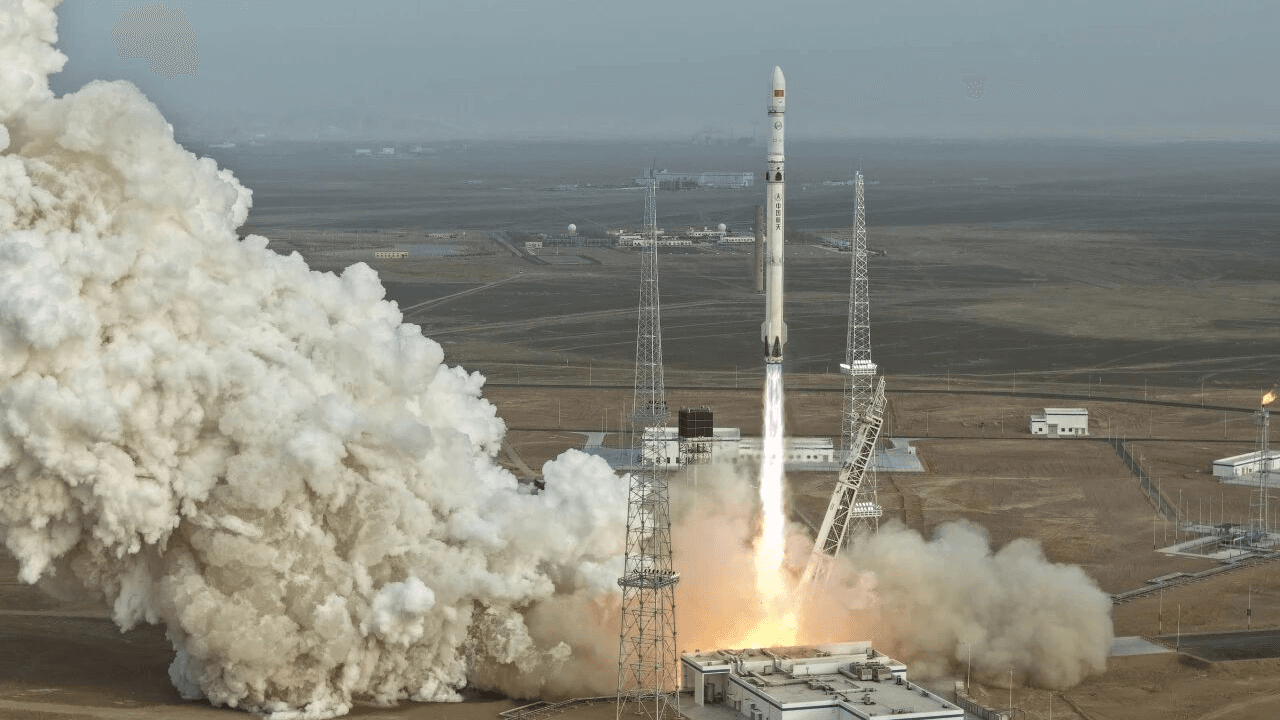
The second flight of
still has no date. Our colleagues at Space Launch Now list it as a test mission from the Jiuquan launch centre, with a payload yet to be announced, and note explicitly that the flight was added to the schedule on the strength of rumours. The original tentative date given by Next Spaceflight was 31 August, but that has long passed and the status remains "TBD". China's state rockets are rarely announced in advance, so the first news of this flight may well be the launch itself.
Why does this flight matter? The first attempt, on 23 December 2025, was half a success. As SpaceNews reported at the time, the rocket reached orbit but the attempt to recover the first stage failed. According to Next Spaceflight, the stage ran into trouble during its braking burn and crashed a few kilometres from the landing zone, which lies around 300 km from the launch site. Long March 12A is the tallest rocket China has ever built, and state-owned CASC's first attempt to recover a rocket stage after an orbital flight.
Since then, though, the race has moved on. On 10 July CASC recovered the first stage of a Long March 10B, but in an entirely different way: with a net strung over a platform at sea. Then on 19 August private LandSpace landed a Zhuque-3 booster on its legs in Minqin County, Gansu Province, after putting a satellite into orbit. Sixth Tone described the landing as the first of its kind in China, and Next Spaceflight added an awkward detail: after touchdown a fire damaged one of the legs and the stage toppled over. Minqin is exactly where Long March 12A. is meant to land too. In other words, the state giant will try to repeat, at the same spot, something a private start-up has already done first. For China's space industry that is a rather unusual pecking order, and to me it says more than the landing itself.
There is another detail you don't often see in a state project. The seven Longyun-70 methane engines on the first stage are not made by CASC but by private company Jiuzhou Yunjian, while the second stage uses a single YF-209V engine from the state-run liquid propulsion institute. Success or failure of the landing will therefore be very much a test for the private supplier as well.
For those who follow the numbers: the rocket is 69 m tall, 3.8 m in diameter with a 4.2 m fairing, carries up to 12 tonnes to low Earth orbit and produces 5,250 kN of thrust at lift-off. Both stages run on methane and liquid oxygen.