In May 2024, farmers in Nebraska and Kansas parked their tractors at the edge of their fields and waited. The strongest geomagnetic storm in two decades had scrambled the GPS signal, and a John Deere dealer was advising customers to switch off RTK corrections because accuracy had been seriously compromised. Tractors that normally plant rows with centimetre precision suddenly had no idea where they were. That story (solar storm GPS accuracy disruption, as people search for it on Google) comes to mind every time a country decides it doesn't want to depend solely on American satellites.
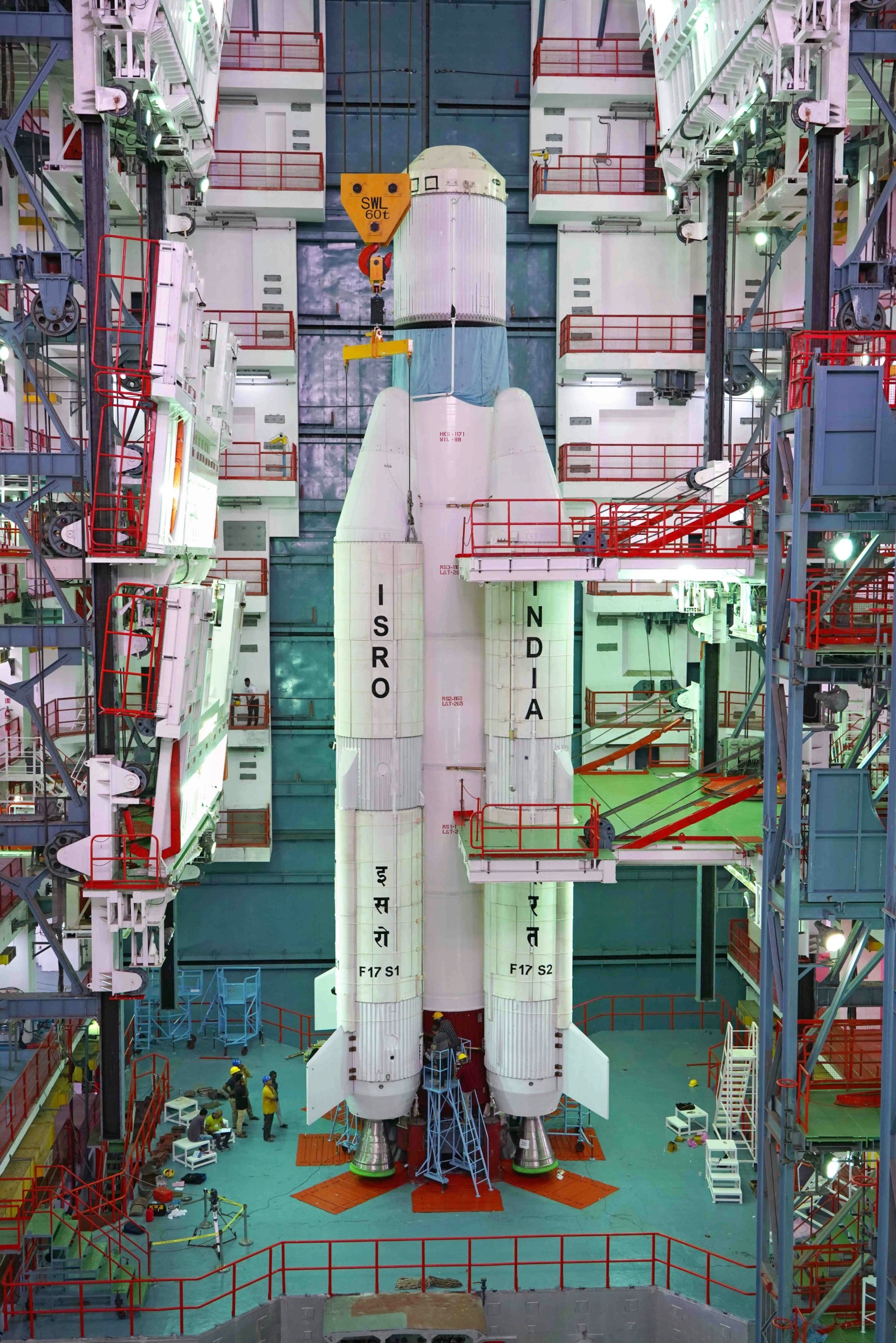
India is exactly such a country. Around mid-October the rocket
is due to lift off from the second launch pad at the Satish Dhawan Space Centre in Sriharikota carrying the NVS-03 navigation satellite (also known as IRNSS-1L). Notices to airmen (NOTAMs) point to 13 October at 17:00 UTC, or 20:00 Bulgarian time, but Indian media are talking about a window between 15 and 20 October, so the date is not yet final.
The stakes are higher than the word "replacement" suggests. The NavIC system (formerly IRNSS) is currently all but out of action. Of the 11 first- and second-generation satellites launched, only three are working: IRNSS-1B, IRNSS-1I and NVS-01. There are two reasons, and neither is pleasant. The imported Swiss atomic clocks on the first generation failed en masse, and in January 2025 NVS-02 failed to reach geostationary orbit. The system needs at least four satellites to work on its own, so NVS-03 will quite literally bring it back to life. I confess I struggle to think of another national navigation system that has spent so long below the minimum threshold without it becoming a major scandal.
The satellite weighs around 2.2 tonnes and will be placed in geostationary transfer orbit, from where it will raise itself to its final slot using its own engine. The new NVS series uses a mix of imported and Indian-made atomic clocks and has a 12-year design life instead of 10, a sensible lesson learnt from the first generation's troubles. This time engineers are focusing mainly on the satellite's own propulsion system, with its pyrotechnically actuated components, rather than on the rocket, because that is exactly where NVS-02. went wrong.
The link to solar storms is not just a journalistic gimmick. NavIC transmits on two frequencies, L5 and S-band, and dual-frequency signals let a receiver calculate and correct for the delay the ionosphere adds to the signal, precisely the delay that goes haywire during geomagnetic storms. India also sits close to the equator, where the ionosphere is generally more unsettled. A national system with this design is about more than prestige, although the military, which relies on its encrypted signal, clearly has its own motives too.
If NVS-03 reaches orbit, ISRO plans to add NVS-04 and NVS-05 by September 2027, with one more satellite after them, to restore the full baseline constellation of seven. Until then, India will rely on the minimum of four and the hope that the Sun behaves itself.