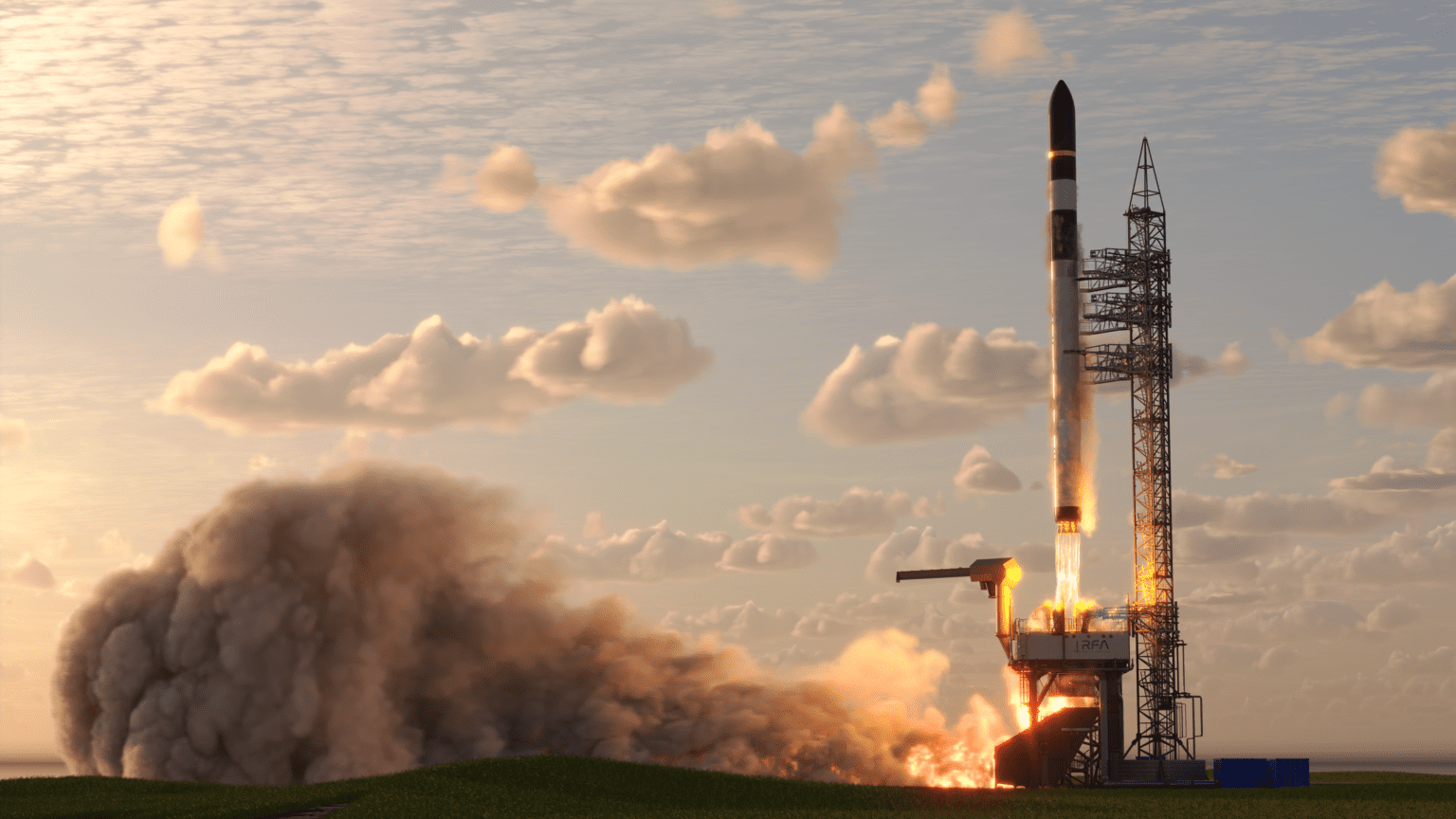
The European Space Agency has awarded Rocket Factory Augsburg (RFA) a further €2.7m for its infrastructure at SaxaVord Spaceport in Shetland. The money comes from the UK budget but is channelled through ESA's Boost! programme. It will pay for stands to test Helix engines on their own and fully assembled RFA ONE second stages, plus additional ground infrastructure the agency does not specify. At first glance this is modest, almost technical news. Set against the company's whole history, though, it says a good deal about how Europe funds its small rockets.
Officially, ESA says these are capabilities without which the first test flights from SaxaVord cannot be carried out safely. The most intriguing line in the announcement is something else. It is the agency, not RFA itself, that says the rocket's static fire test is coming "soon". The company has been silent since July, when it stood a fully assembled RFA ONE on the pad, tested it for a week, found an unspecified problem and took it apart for further checks. Before that, in August 2024, the first stage meant for the maiden flight burned up during a similar test. Two years on, RFA is still at the "before the static fire" stage.
How the money added up
Dig through the company's press releases and the timeline looks like this:
February 2021 – RFA announces a price of €3m per launch, aiming to undercut every competitor.
April 2022 – wins the German space agency DLR's microlauncher competition, worth €11m; the German state becomes anchor customer with up to 150 kg of payload on each of the first two flights.
September 2022 – signs the Boost! contract with ESA through which the €11m is paid out, in a record eight weeks.
August 2023 – investment fund KKR puts in €30m via convertible bonds, alongside majority owner OHB; the first flight is slated for the second quarter of 2024.
November 2023 – the UK Space Agency provides €3.6m (again via Boost!) for first-stage test infrastructure at SaxaVord.
January 2025 – RFA receives a UK launch licence.
March 2026 – the stages arrive in Scotland.
27 August 2026 – ESA signs a €186.9m European Launcher Challenge contract.
23 September 2026 – the new €2.7m.
In total, the company has now raised more than €33m through Boost! from Germany, Portugal and the UK.
The heaviest figure, of course, is August's. €186.9m is nearly four times everything RFA had put into its development by the summer of 2023 (at the time the company itself said it had spent less than €50m). But that money is conditional and needs reading carefully. The first tranche is released only if the rocket reaches orbit by the end of 2027. The second funds upgrades that must be demonstrated by the end of 2028.
This is where the comparison with rivals gets awkward. Isar Aerospace, which received €197.8m under the same programme, flew Spectrum successfully for the first time this month and put five CubeSats into orbit. RFA is in the same funding bracket, yet it has not even reached a static fire of an upright rocket.
I don't think that makes RFA a bad investment. Its staged-combustion Helix engine was a genuine technical achievement for a European start-up, and in 2023 the company became the first in Europe to fire a complete upper stage with such an engine for a full mission duration. The problem is the gap between schedule and reality. A debut promised for spring 2024 is now more than two years late, while public money keeps arriving in small, logical instalments, each of which sounds perfectly reasonable on its own. Millions for concrete and test stands in Scotland only make sense if a rocket one day lifts off from them. And ESA's clock is already ticking towards the end of 2027.