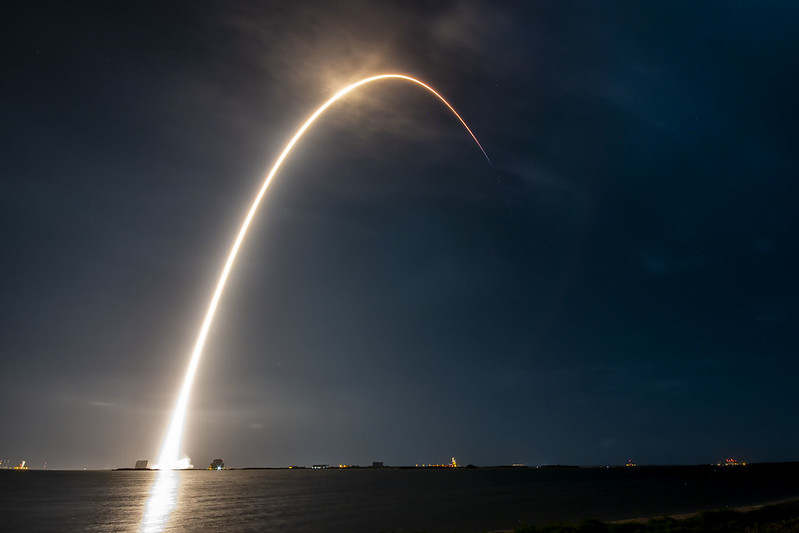
If all goes to plan, the biggest rocket ever built will lift off from Starbase in Texas on Monday at around 15:15 Bulgarian time, and this time it won't settle for an hour-long hop over the Gulf of Mexico. SpaceX has billed Flight 14 as the first in which Starship will reach orbit around the Earth. There is a caveat: "pending regulatory approval", which in this programme stopped being a formality long ago.
The payload is the most interesting part. The ship carries 26 Starlink V3 satellites, the first of the new generation that will actually go into service. Flight 13 already carried 20 of them in July, but that mission never reached orbit and they came down with the ship. Which explains why SpaceX is sounding so cautious this time. Three of the new satellites have cameras and, once deployed, will photograph the ship's heat shield to check for damaged tiles before re-entry. A spacecraft taking a selfie to find out whether it will survive the trip home sounds like the plot of a cartoon. In reality it is a rather sober piece of engineering.
Personally, I'm struck by one sentence in the mission description, because it says more than all the promotional videos put together: the ship will only fire its engines to enter orbit once the team is confident the hardware for the subsequent descent has enough redundancy. In other words, SpaceX doesn't want to leave a 100-metre steel hull circling over our heads without a reliable way to bring it down. That is the right instinct.
The flight itself will last nearly 10 hours, at an altitude of around 275 km, with roughly six orbits of the Earth and a splashdown in the Pacific west of Chile. Booster 21 is due to perform a boostback manoeuvre and splash down off the Gulf coast. Ship 41 also carries a small piece of history: two tiles recovered from Ship 40 will fly again, the first reuse of any part of the heat shield. There will be no tower catch this time, for either the booster or the ship. The launch window is 75 minutes, so the time may slip if something in the countdown snags.